
Water temperature is an important factor in oxygen retention in the nutrient solution. Water is generally chilled to a temperature between 18–24 °C in order to maintain proper dissolved oxygen concentration since oxygenation solubility in water increases as temperature decreases. Chilling the water also helps to prevent pathogens such as pythium, delays bolting, and can increase yield. [Wikipedia]
Reverse Osmosis
Every 7 days I change the nutrient solution in each of my tanks. I begin by filtering my tap water with a reverse osmosis filter. Reverse osmosis is a process that removes foreign contaminants, solid substances, large molecules and minerals from water by using pressure to push it through specialized membranes.
I have a HomeMaster unit with a 4 gallon tank plus we have a water softener installed. This saves time and money over the cheaper RO filter systems I have used in the past.
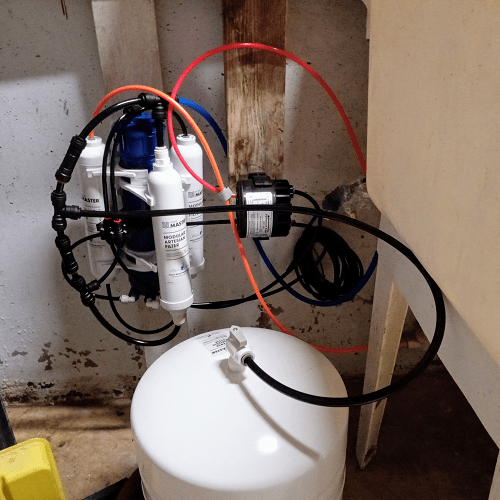
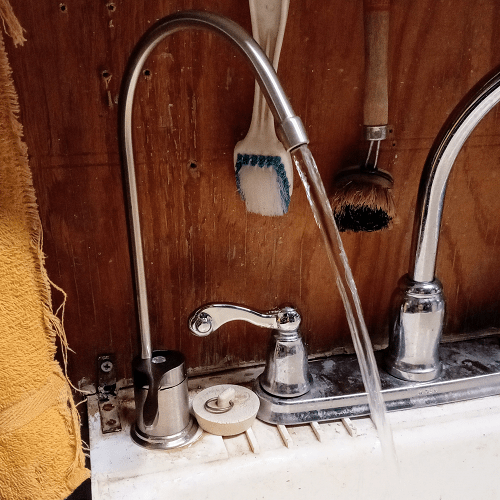
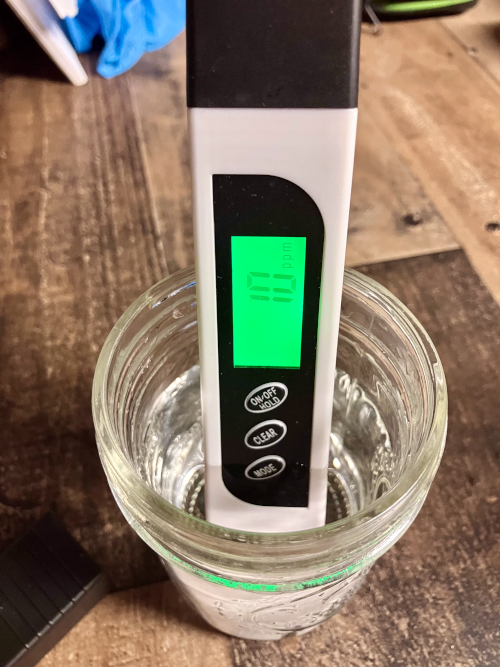
I use a conductivity pen to measure the level of particulates in the water after it has been processed by the RO filter. Over time the filters become less effective and need to be replaced when the pen registers above 20 ppm. I use my current system because I can actually find filters when I need to replace them and they are reasonably priced.
The Weekly Routine
I change the nutrient solution in 3 DWC buckets at a time and change the clone buckets on the 3rd day. I mix in the the three Flora components and Cal/Mag according to the schedule on the Nutrients page at least an hour before starting to let the pH settle. The Flora series must be added in the order of Micro, then Gro and finally Bloom. Each one must be thoroughly mixed before adding the next component. The Cal/Mag goes in last.
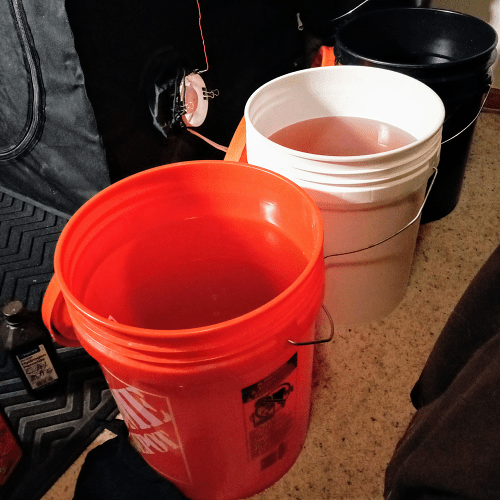
Star San, a food safe foaming sanitizer is used before changing the nutrient solution each week. Each bucket is rinsed out and wiped down before adding the sanitizer. After soaking for at least 10 minutes the bucket is emptied, rinsed and wiped down.
I spray the bucket top and plant roots with tap water each week. Tap water usually contains just enough chlorine to kill most pathogens. This keeps air borne viruses and other pathogens which may collect during the week. When I had a problem with stems rotting in my clone bucket I started misting the stems and bucket lid with tap water daily.
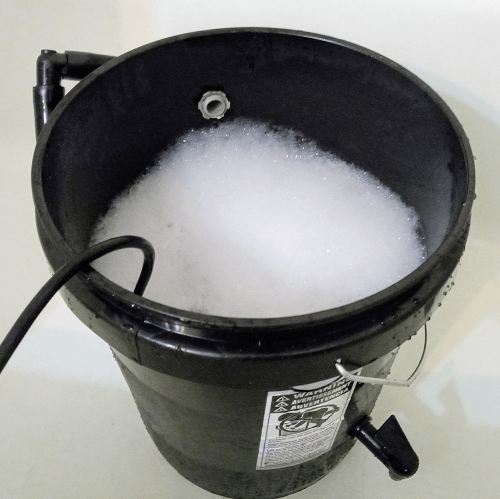
I use a 700 gph sump pump to transfer the solution to the clean bucket. This is plugged in to a switch with a remote control, making it easy to control the flow of water. Adding a 50 micron filter has reduced the amount of staining on the roots and I no longer have a problem with nutrient build up from Micro clogging my misters.
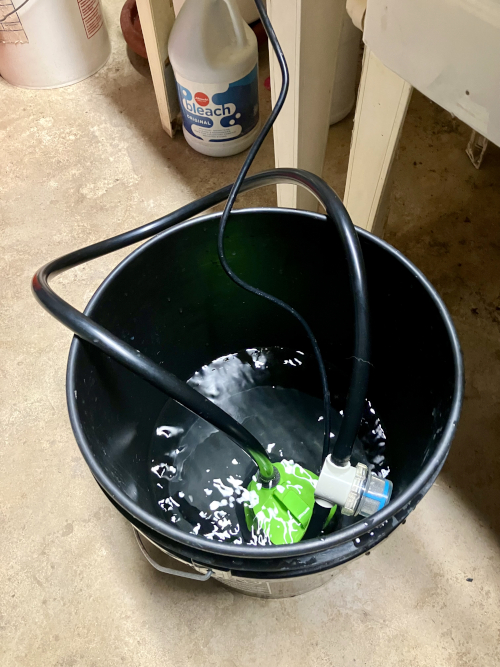
Aeroponic clone bucket
I put 10 liters of solution in each clone bucket weekly based on the schedule for nutrients. This is enough that I don’t have to add any during the week and have extra for using to soak clones before they go into the bucket.
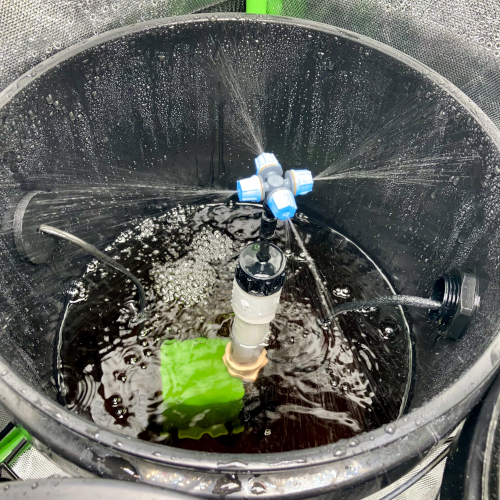
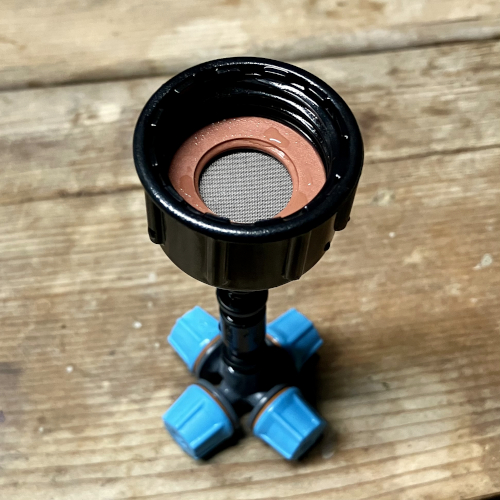
I check to make sure the nozzles are not clogged on the the foggers and clean the screen.
Misc.
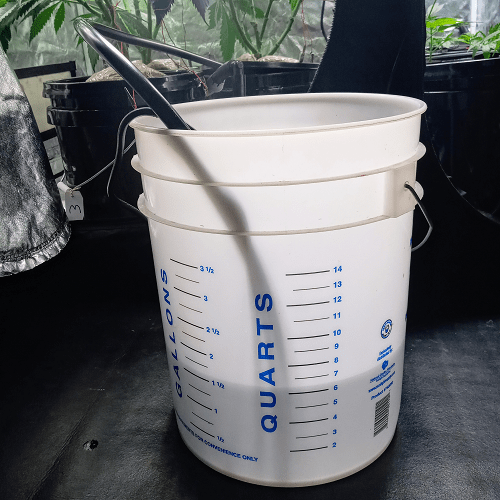
A graduated bucket or two come in handy. I know how much water goes into each bucket and these make it easy to set up buckets for the DWC or Cloner. They also help when replacing solution lost to evaporation and plant uptake.
pH
For optimal plant health the pH level needs to be checked every day to make sure they are in the range between 5.6 and 6.0. I use a pH meter every evening. Although, so far, the pH in the buckets is very stable and only fluctuates a tenth of a point, if at all, during the week. If necessary I adjust the level using two products, one is called Down from General Hydroponics and I use baking soda to raise the pH.
pH levels and what causes them to fluctuate is an extremely complicated subject. The “ideal” pH for hydroponics is around 5.6 – 5.8. Running a bit high, 6.1 – 6.3, is better than a little low. Never let it go below 5.1 or above 7 as this may damage the plants.
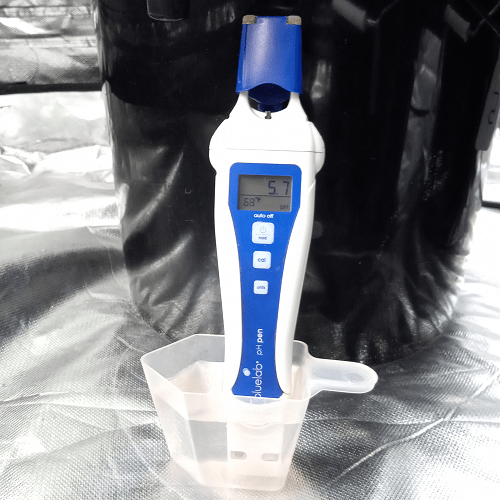
Normally the pH should stay around 5.6 – 6.0. By checking the pH daily and keeping a record you can see when your pH is steadily going in one direction or rapidly fluctuating. This is a good way to trouble shoot your system and fix any problems before the plants are damaged.
 Growing medical cannabis