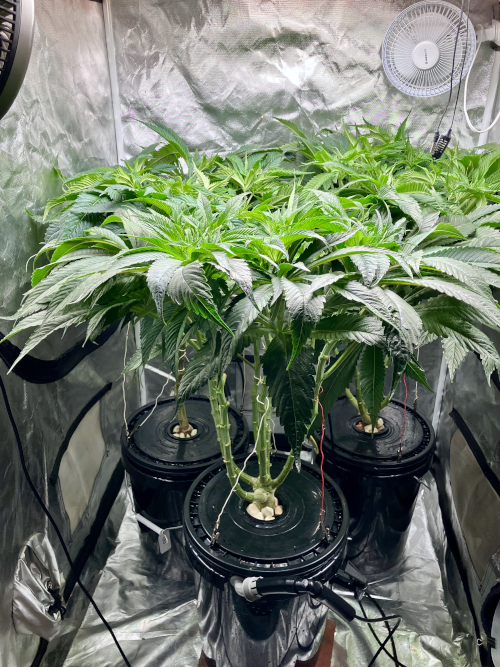
I use a system called Deep Water Culture (DWC) growing the plants in black buckets using an air pump to circulate the water. During the vegetation stage, about 6 weeks, the light will be on 18 hours a day and 12 – 20 inches above the tops of the plants. I fill the buckets using the schedule on the Nutrients page.
To prevent problems with disease and bacteria these buckets need to be sanitized regularly and as light tight as possible.
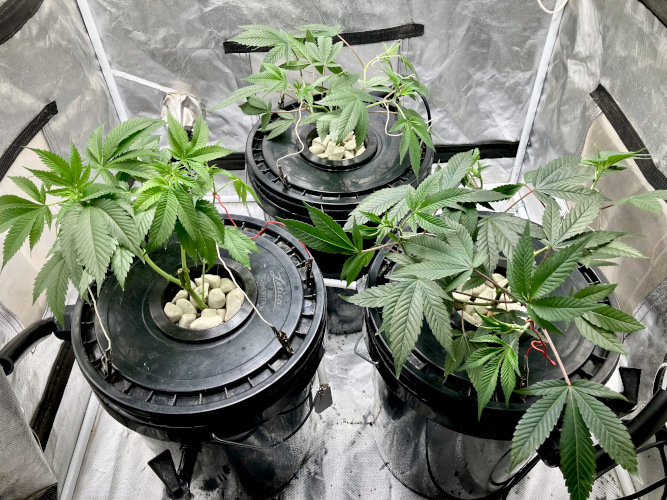
new plants moved from clone tent to buckets 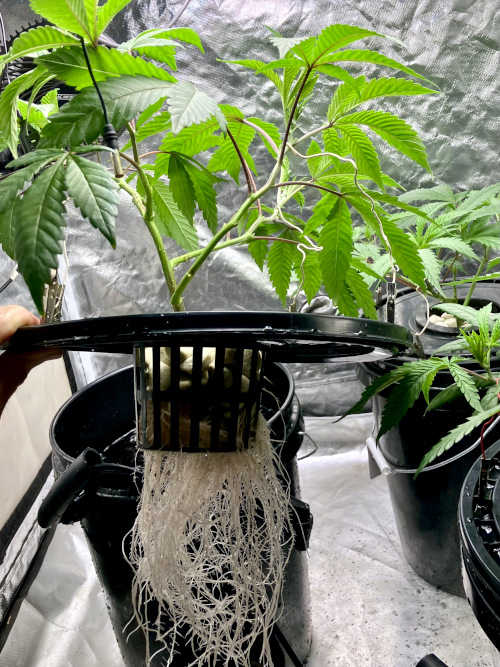
One week roots 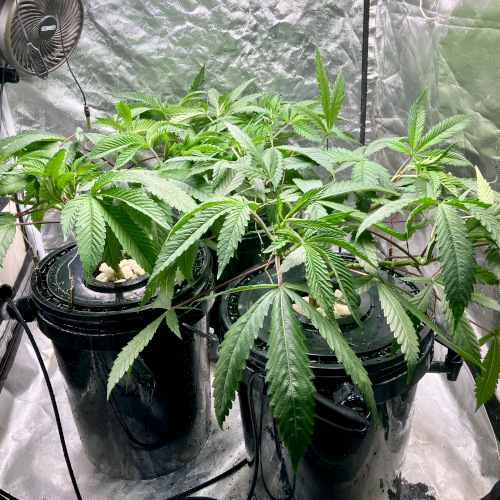
Plants after two weeks in bucket 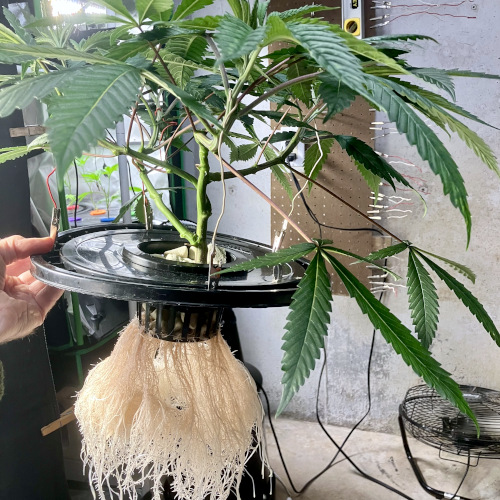
Roots after two weeks in veg bucket 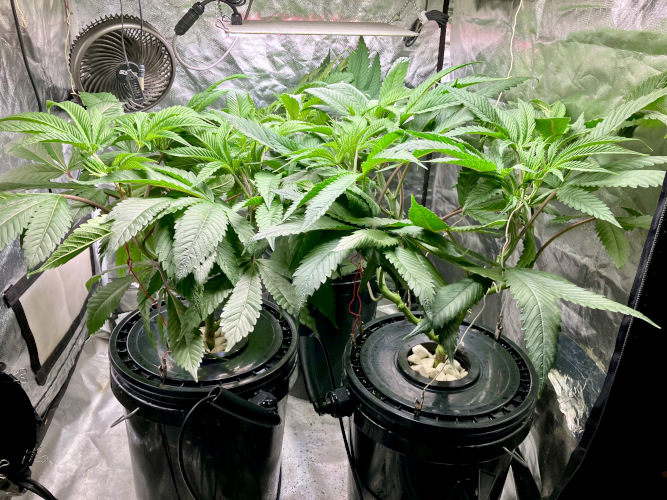
Three week old veg 11 to 13 12 inches 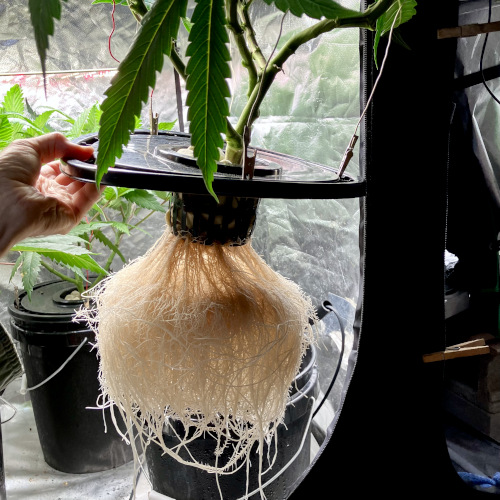
Roots at three weeks 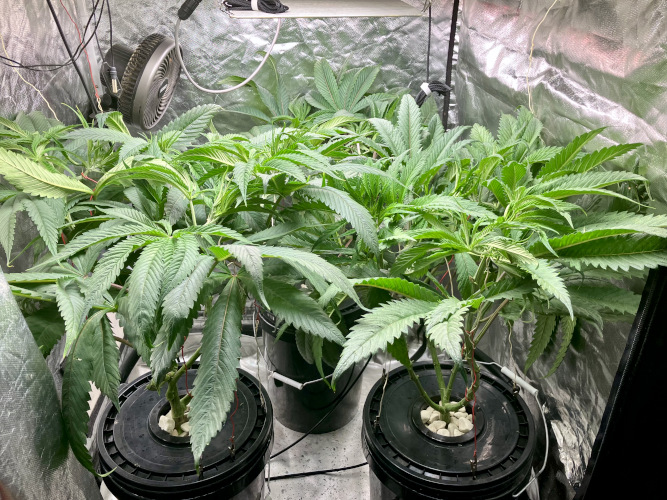
Four weeks in veg 15 to 17 inches 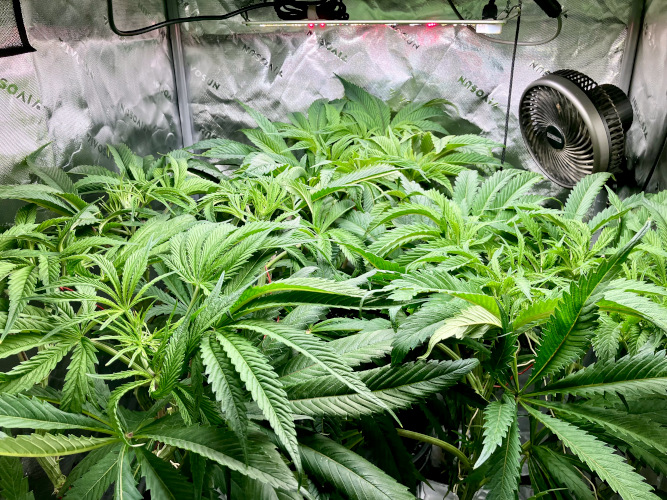
5 weeks in veg I am going to try starting some plants at 5 weeks. 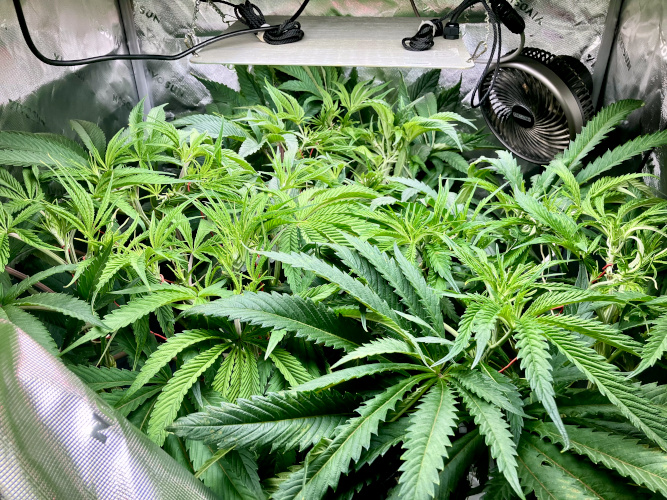
6 weeks and ready to start flowering.
Finding a black bucket that actually blocks the light was difficult. A cheap set of hole saws cut the various holes needed for vents, taps and the pump cords for the Aeroponic bucket. I have found a better, water tight fitting for the vents [NPT 1″ Cord Grip Cable Glands, Waterproof Adjustable 18-25mm Plastic Cable Connectors Nylon Joints with Lock Nut and Gaskets] and replaced the bubblers with a 5 inch air stone. I have two air pumps running with 3 buckets attached to each one providing a very powerful air flow to move the roots and keep the bucket well aerated. This way I always have a back up air pump ready to go in case one dies.

Deep Water Culture Bucket 
Basic DWC setup 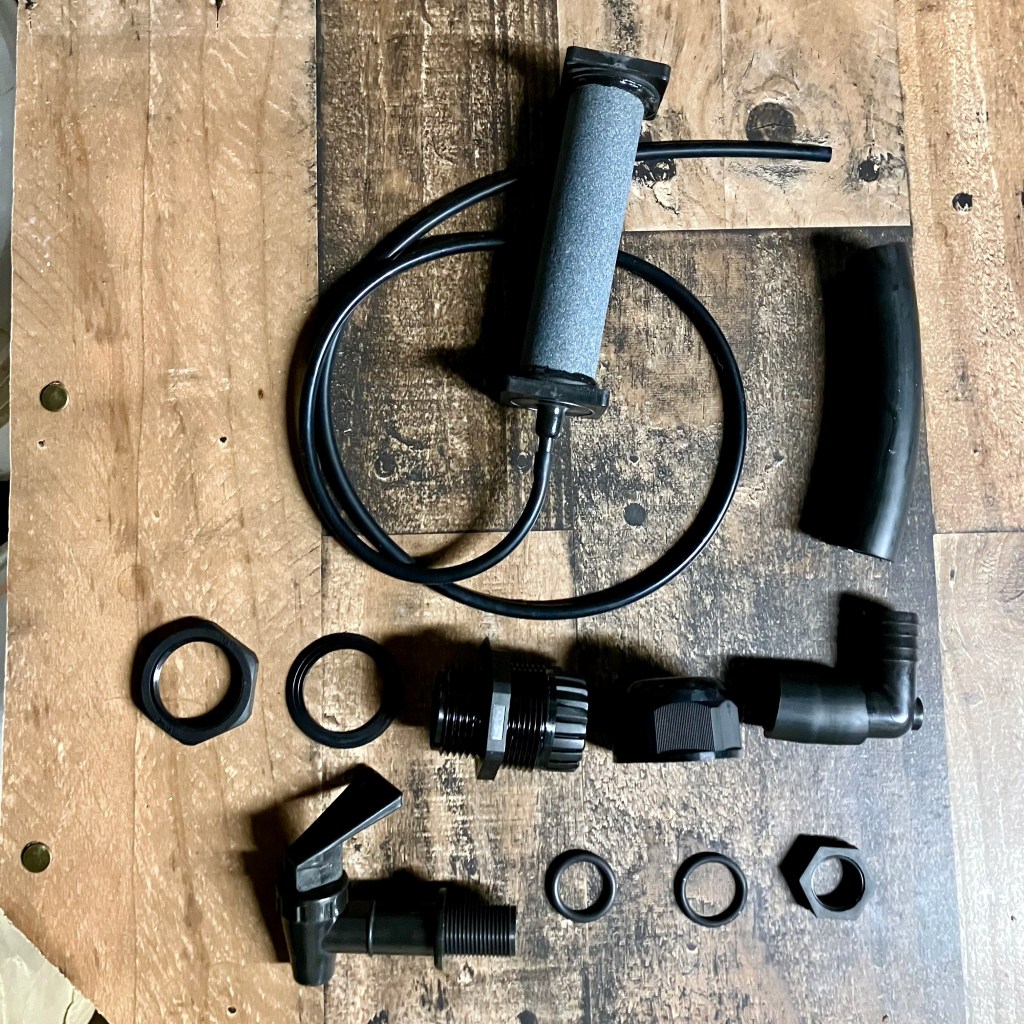
All parts for DWC bucket 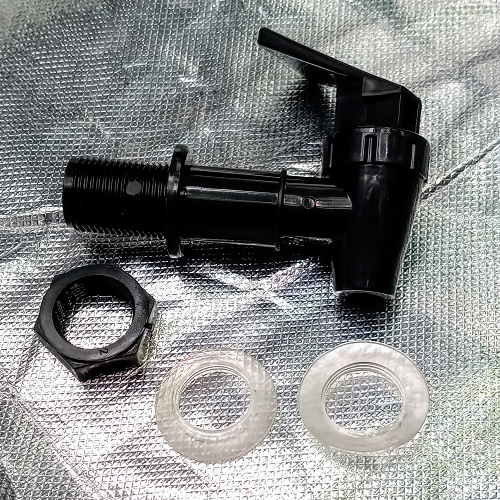
I replaced the clear washers with black O rings. 
5 inch pawfly air stone 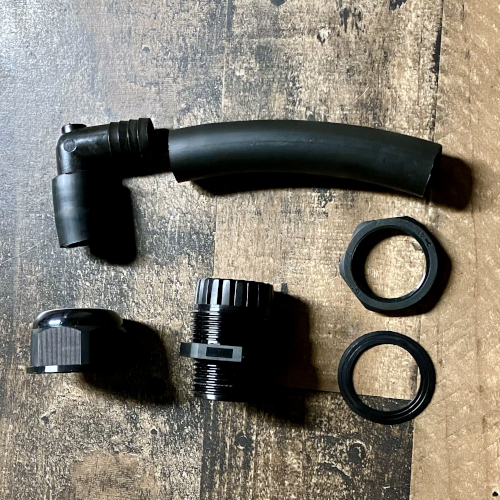
Air vent parts 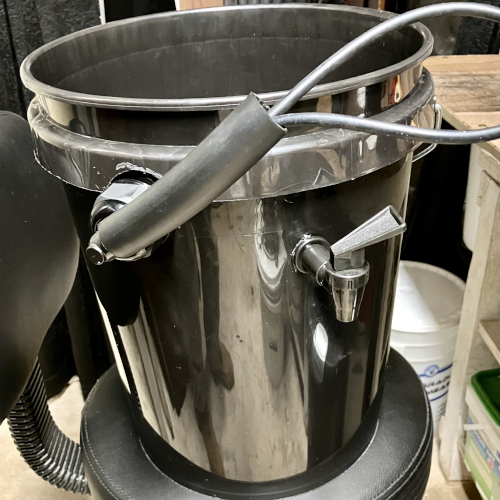
Air vent is tilted up to keep any condensation from dripping on the floor. 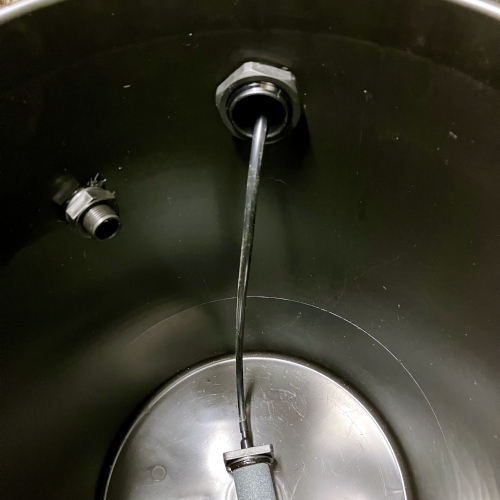
Inside bucket 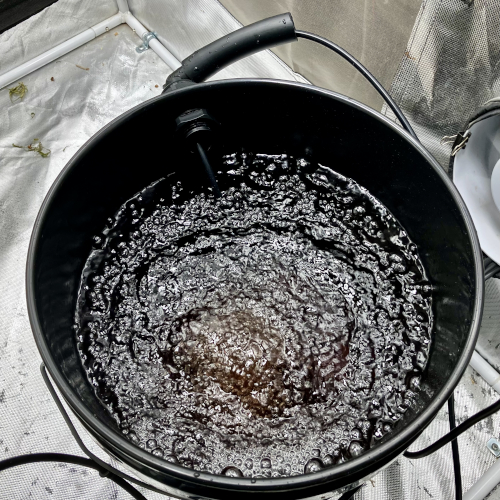
Air stone in action 
Excess trim is removed after cutting hole for net pot 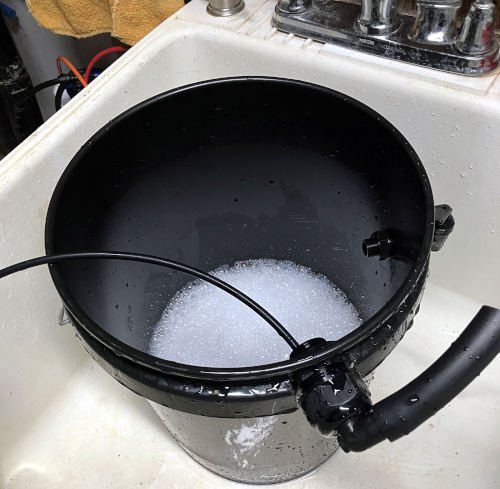
Bucket is sanitized before use. 
Checking pH. 
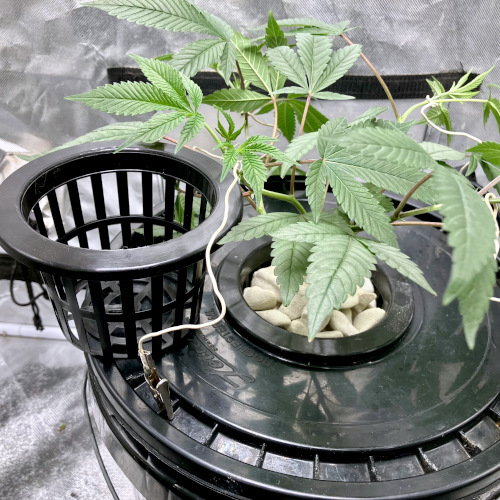
Net pot with plant is placed in the lid. A strip of aluminum foil is used to block light and two small sand bags hold down the foil and help stabilize the plant. 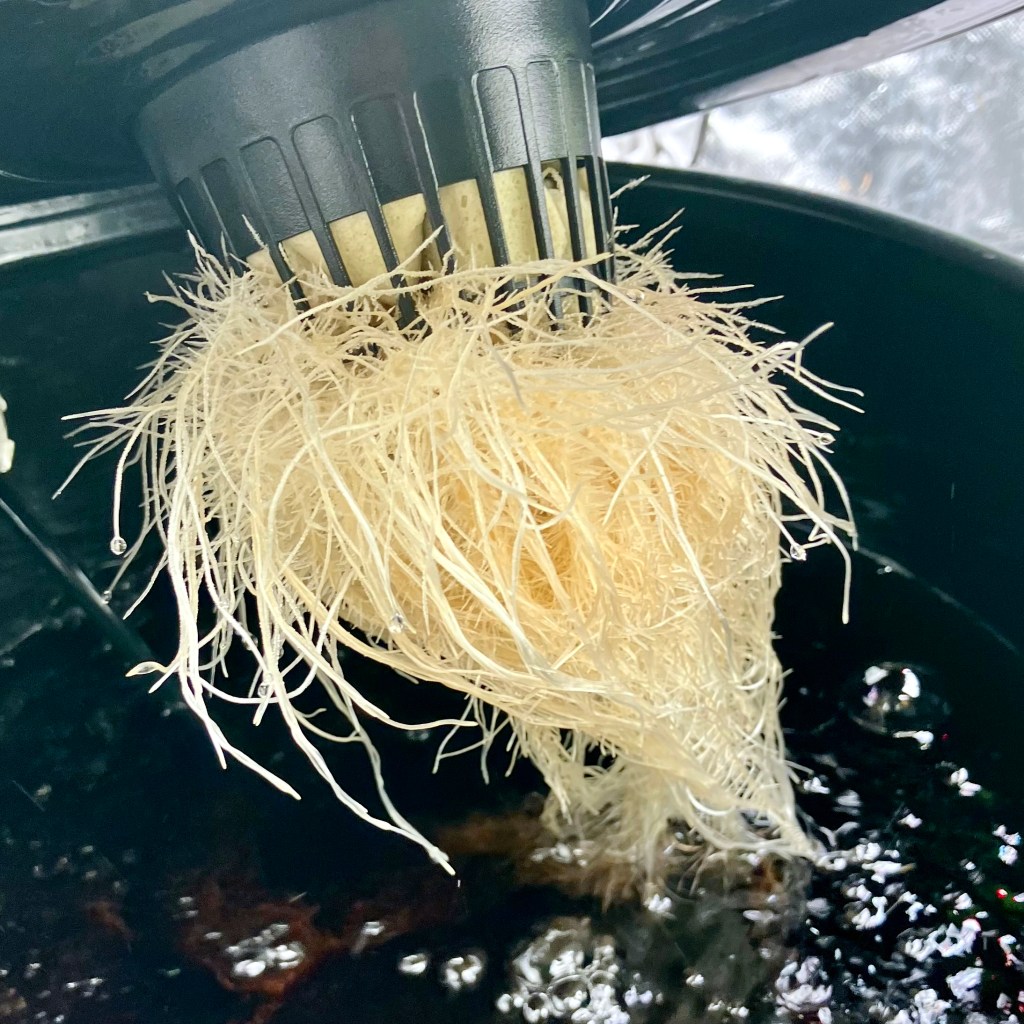
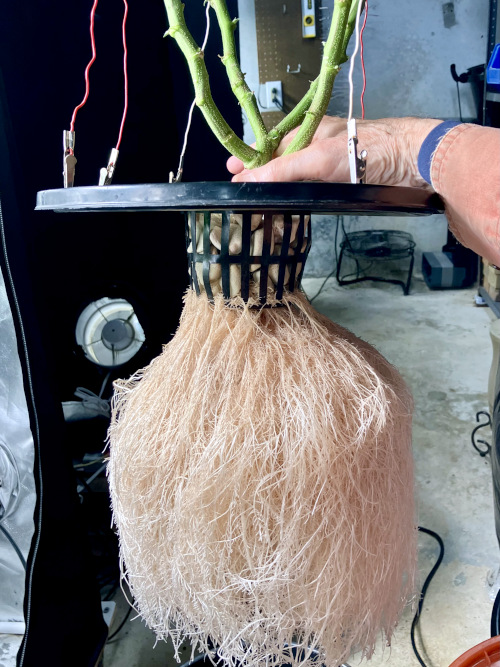
Excellent root growth
I use grow rocks as a medium to hold the plants in four inch net pots. The grow rocks were made from recycled glass and are reusable, unlike the clay pellets commonly used in many cannabis hydroponic setups. These grow rocks are a great product that is no longer being manufactured as the company seems to have gone out of business, although it may still be available online.
In tent A I use a Mars Hydro TS 1000w LED light and a Spider Farmer SF1000 and in tent B I have a Spider Farmer SF2000. Eventually I will replace the two lights in tent A with another SF 2000. These provide the intense, well balanced light needed to maximize plant growth and flower production.
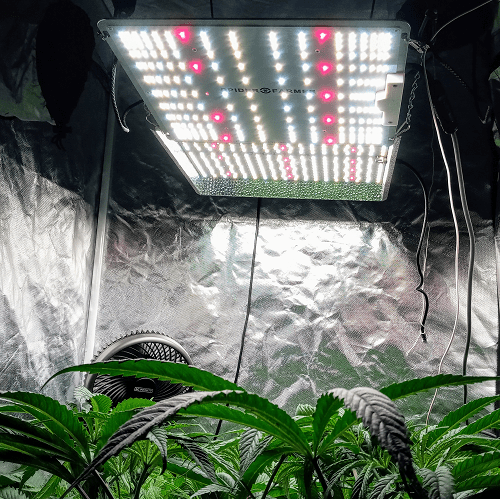
Two 1000 watt (rated) LED in tent A 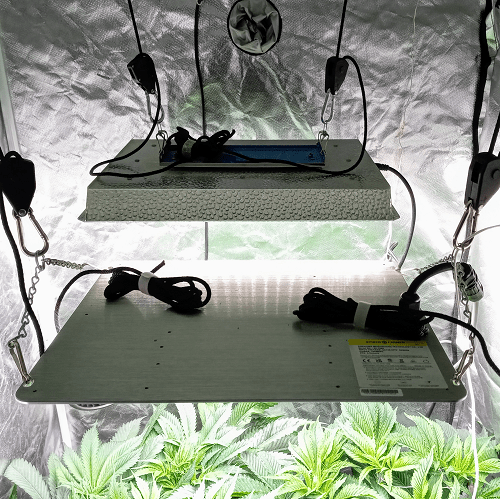
To prevent burning the leaves the Mars light needs to be farther away from the plants.. The hood focuses the light on a smaller area. 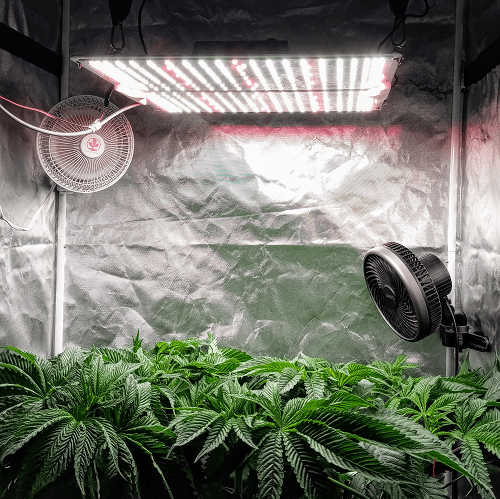
2000 watt (rated) Spider Farmer LED in tent B. Excellent coverage at 2 1/2 sq. foot. Greater density of LED diodes around the edge evenly distribute the light. 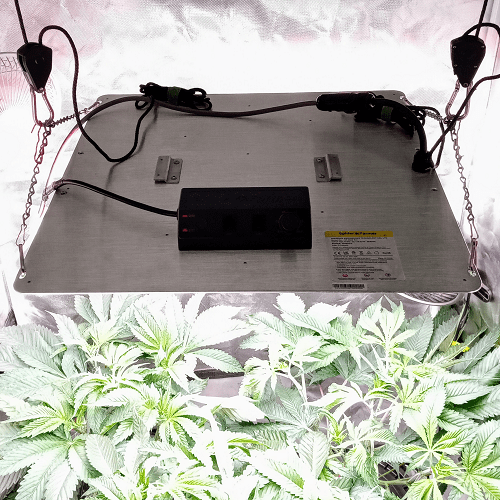
The control for the dimmer on these lights is on top and cannot be removed. I had to extend the cord to reach the regulator.
The plants
At the start of the vegetation stage the lights will be set to around 600 watts (rated) 16 inches above the tips of the plants. At this time it is important to keep all of the stems below the shortest / thinnest stem. The plant will always send more nutrients and resources to the tallest stem and help the stem grow quicker and thicker. This will be an essential part of shaping the plant to prepare it for the flower stage.
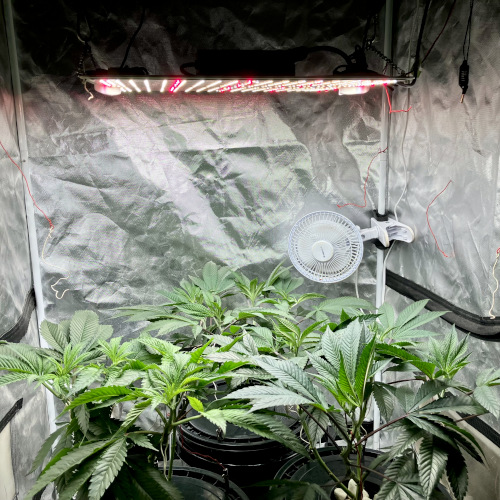
Keeping the stems about equal in height and thickness is my goal when shaping plants during the vegetation stage. As the plant grows some stems will grow faster and I will need to raise the lowest/thinnest stem up above the rest. The plant will then send more resources to this new top stem. I achieve this by attaching a wire below the 3rd or 4th node of the lower stem, pulling it up above the other stems.

When all four stems are long enough to be spread equally around the top of the bucket you can begin raising the amount of light every few days until it is at 2000 watts (rated). The stems will become thicker rapidly and you will need to keep them all close to the same height.
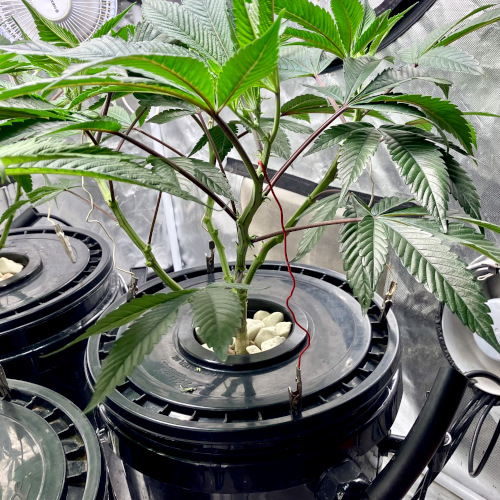
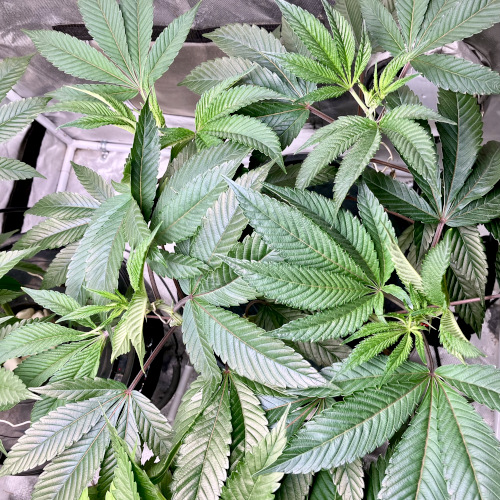
It is very important to check each plant daily to make sure that new shoots are forming. This is a key indicator of the health of the plant. If the plant is stressed the growth will slow. Each strain will grow at different rates so it helps to learn their normal growth pattern and watch for any change.
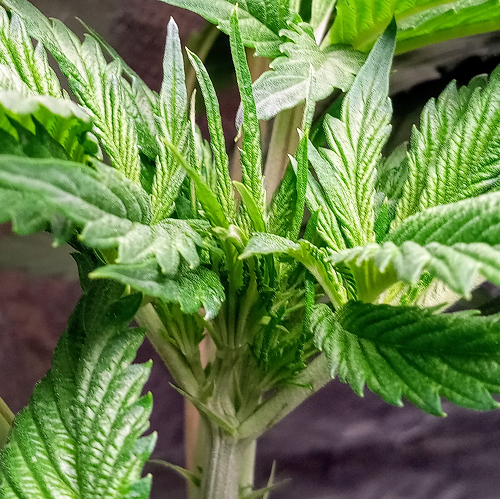
As the plant grows I keep 4 to 6 large fan leaves on each stem, removing the oldest leaves as new ones form. I end up with a skirt of large fan leaves around the outside edge of the plant. The stem tips will be under the most intense light and the outer leaves fill the area to the tent walls. This allows good airflow around the base of the plant and removes the less efficient older leaves which are mostly shaded anyway.
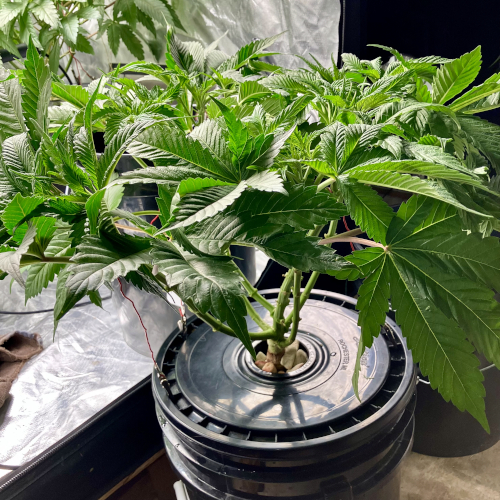
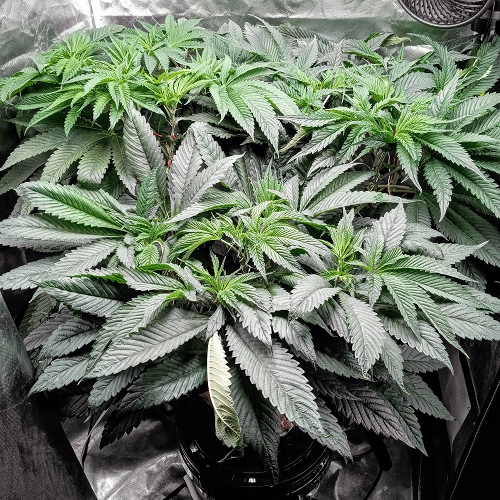
Each day I need to make sure the growing tips on all of the plants are not covered by new growth from the fan leaves. These large leaves will push upwards towards the light. Sometimes I can weave the leaves under other stems but if I can’t I will remove these top fan leaves.
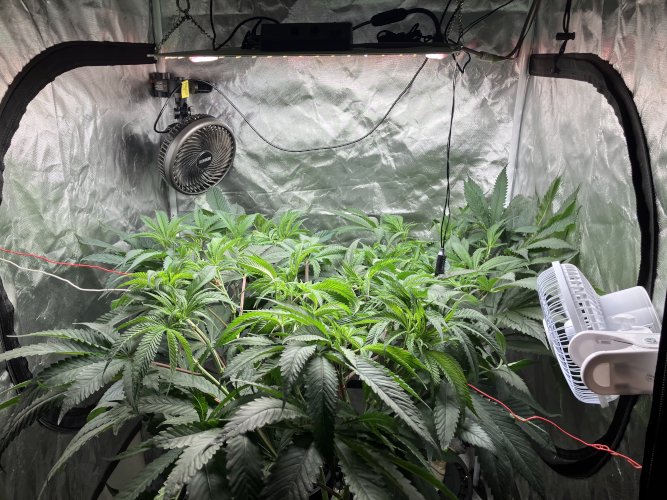
You should be getting good root growth by the 4th week. Root development will vary with each strain. Some have thicker, wiry roots while others will produce masses of fine roots. I add more of the nutrient Bloom to the solution for some plants because they need the extra phosphorus and potassium to promote good root growth.
I usually let the plants grow for 6 weeks before beginning the flowering stage. I begin letting side stems for some strains grow a week before the flower cycle starts. The flowers will form on these stems and this insures there will be enough to form a solid carpet of colas under the lights. I don’t want too many stems to form and may prune the plant to keep the colas from becoming too crowded.
I will remove any fan leaves that have brown spots or other signs of aging.