
Many cases of root rot are caused by members of the water mold genus Phytophthora; perhaps the most aggressive is P. cinnamomi. Spores from root rot causing agents do contaminate other plants, but the rot cannot take hold unless there is adequate moisture. Spores are not only airborne, but are also carried by insects and other arthropods in the soil. Root rot can occur in hydroponic applications, if the water is not properly aerated (Wikipedia)
So basically root rot is always there waiting for you to make a mistake. The main one you can make is not sufficiently providing a high level of oxygen in your solution. Sanitizers and generally keeping the area clean are also necessary to insure the rot doesn’t get a foothold. If plants become infected I use bleach to kill the fungus. It is cheap and powerful. I have never used undiluted bleach and the 20-25% solution is strong enough to kill off the fungus. It is best to immediately spray the plants as soon as you see signs of the fungus (brown slime, or just discoloration in the very early stages). The healthier the plant is the better it will survive the stress of being sprayed with bleach. It will take a plant about a week to recover and, depending on the age of the plant. It may slow growth for a longer time to harvest or prematurely speed up time to harvest.
Currently, when I change the solution in the DWC buckets each week I spray the lid and roots with tap water. The tap water has some chlorine and soak for at least 5 minutes.
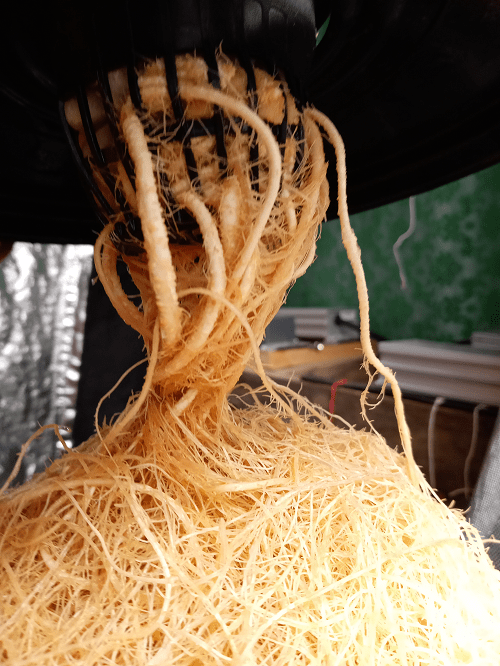
The upper roots on the left had been infected with some form of root rot, causing a light brown coating of slime. I saved this plant by misting the roots with a 1/3 to 2/3 mix of bleach and water (20 to 25% works and is safer). Only soak in bleach for about 5 minutes or less, just enough time for the roots to absorb a small amount of bleach to kill any fungus inside. It may take one or two applications to kill off the fungus depending on how much the fungus has spread. Spray the upper roots thoroughly and some on the lower roots, don’t get too carried away. These lower roots will be exposed to the bleach when you rinse them.
VERY IMPORTANT! Rinse the roots in 5 gallons of tap water at least 5 times. Let the roots drain in a second bucket while you fill the bucket with fresh water each time. Also the solution will need to be changed daily and the plant rinsed in tap water a couple of times until the smell of chlorine is gone.
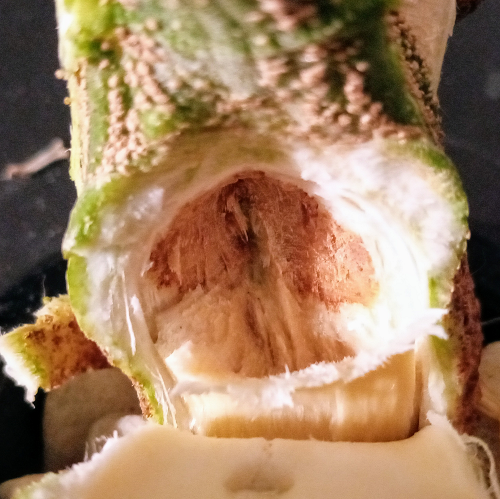
This is the broken stem of a plant showing where the roots grow into the stem. The brown coloration in the center is where the root rot has moved up in to the stem. This plant will die, once the stem is infected there is nothing I know of that will save the plant. When the leaves begin to wilt it is a sign, I am pretty sure, that the stem is infected and the plant will die. I have not been able to save any plant once the leaves begin to wilt.
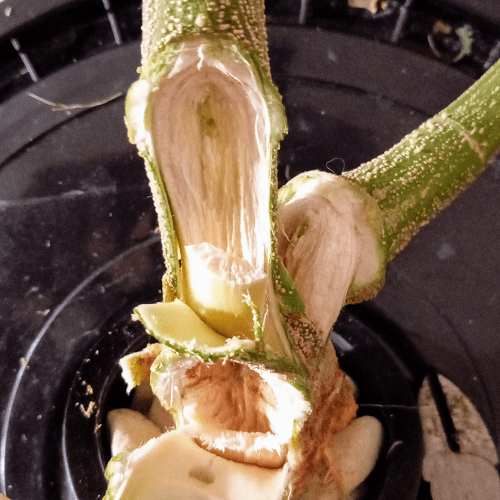
The first image is of a multi stemmed plant, white healthy roots on two stems and the lower stem with root rot damage.
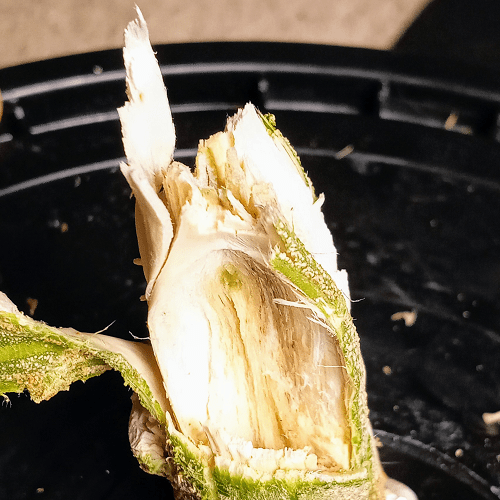
The second picture is another plant killed when the root rot got into the stem. The stem should be all white but is slightly discolored on the right side.
I made a couple of major mistakes when first setting up the DWC bucket system. I didn’t get the air hose connected to a plant when I changed the solution. (This is now the first thing I check after replacing the solution) I didn’t notice for a few days and just connected the air line when I saw the problem. I was busy and the plants where doing great. The spores that cause root rot are everywhere so when I let the water get anoxic it provided a breeding ground for the fungus.
The second mistake I made was getting lazy and dropping the end of the hose down into the solution when adding more solution during the week to replace what was lost from uptake and evaporation. This helped transmit the fungus to my other plants. The plant least affected was one several weeks younger than the rest and seldom needed more solution during the week.
One consequence of using bleach on the roots may be that the plant seems to go into a holding pattern after being sprayed. For about a week afterward there is very little uptake of water, possibly do to damage the bleach did to the roots. However, when the plants are infected with root rot the plant also will stop producing new (white) roots. In either case the plants should rebound and start producing new roots and growing again in 7 to 10 days.
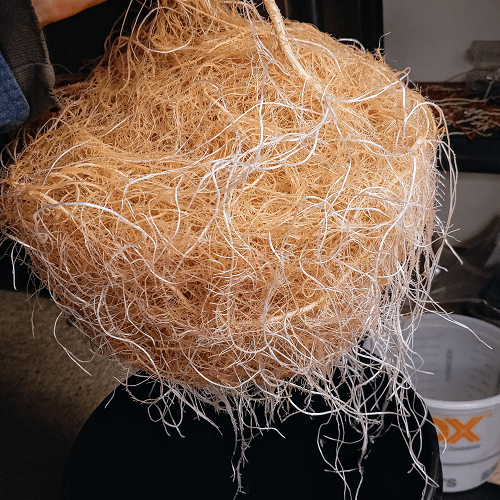
This method stopped the root rot in its tracks. Hitting it hard and as soon as possible will put the least stress on the plants. These plants recovered in the opposite order of when the were infected. The first infected were the last to recover.
 Growing medical cannabis