
Light is one of the most important factors in determining the potency and size of cannabis flowers. They now have LED lights which, unlike the purple light of the first LEDs, produce a yellow light that has the proper spectrum of light for cannabis plants. The yellow light also makes it easier to inspect the plant and judge its health.
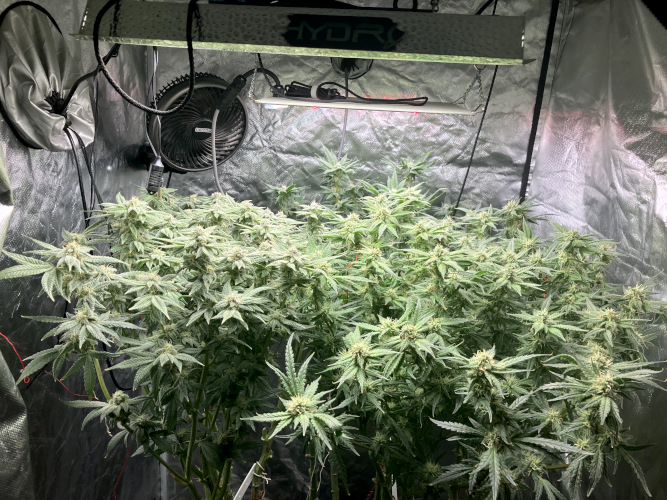
There is a direct correlation between the intensity of light to the amount of THC and terpenes a flower will produce. These 2000 watts (rated) LED lights are probably the most light I can use in these tents. These lights will damage the large fan leaves if placed to close.

The decline in illumination with distance is called falloff or attenuation. Illumination (like gravity) declines in proportion to 1/r_squared, so if you double the distance, you get 1/4 the illumination. No matter how strong your lights are they will experience a rapid decline in illumination, limiting the area where the light is most effective.

I have made charts for the three lights I use for veg and flowering. The Mars 1000 rated LED light has a hood to focus the light directly under the fixture and needs to be farther from the top of the plants. I can place the the Spider Farmer lights closer to the plants because they are set up to be used in a series. Since the outer edge has more LED diodes per inch than the center the light directly below the fixture is not as intense. They are designed to be laid out in a grid. The gap between the lights gets extra illumination from each side to provide even lighting for the area below.
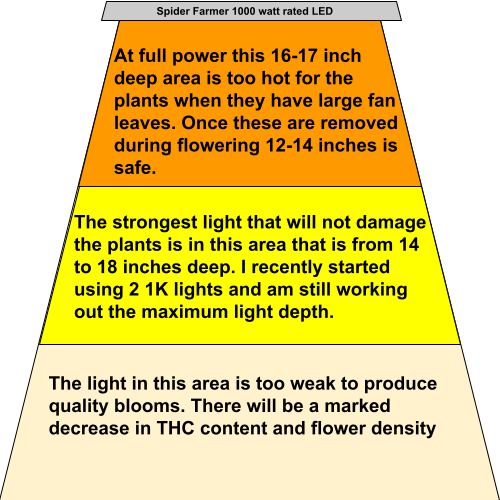
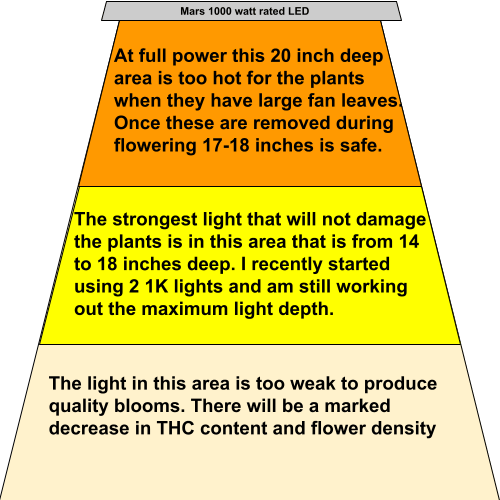
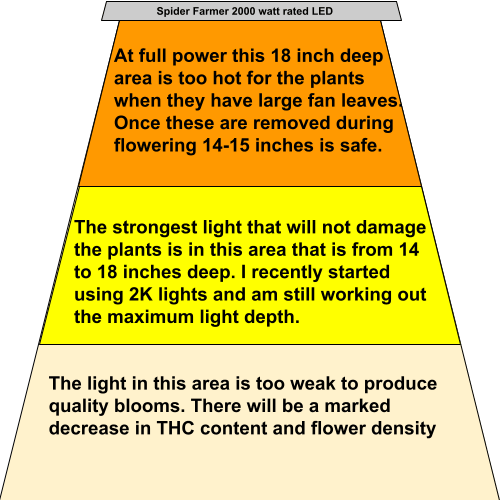
I use four LED lights in two tents. In Tent A I use a 600w (rated) over the clone buckets, and two 1000w (rated) for the three DWC buckets. I use a single 2000w (rated) light in Tent B. These lights are efficient, costing about $15-$20 a month to run. All but the 600w have dimmer switches.
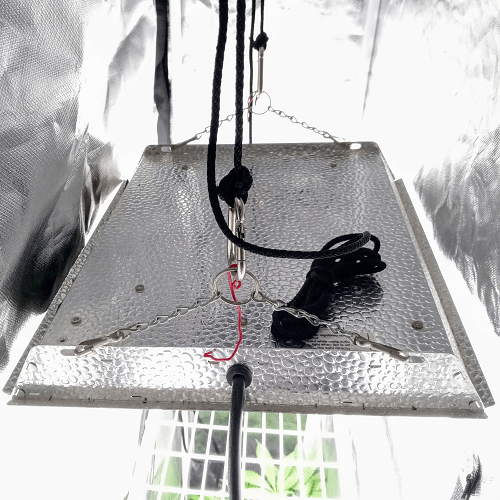
600 watt Mars light over clones 
This light does not have a dimmer. It is 3 ft. over the clones to get them to grow at the right speed. 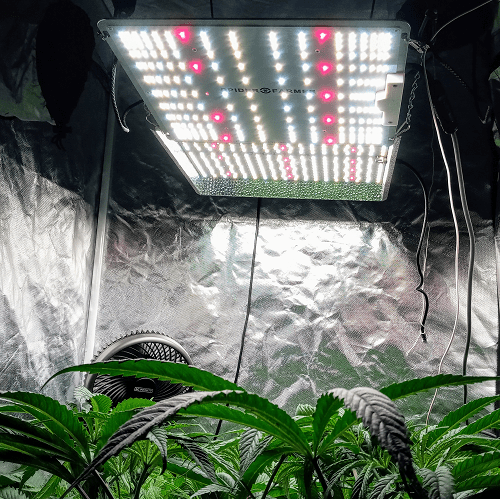
Two 1000 watt (rated) LED in tent A 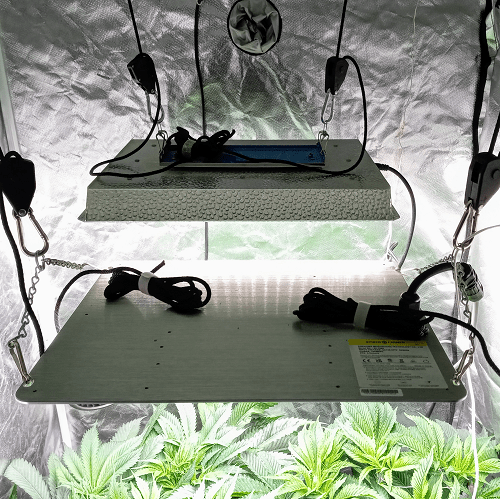
To prevent burning the leaves the Mars light needs to be farther away from the plants.. The hood focuses the light on a smaller area. 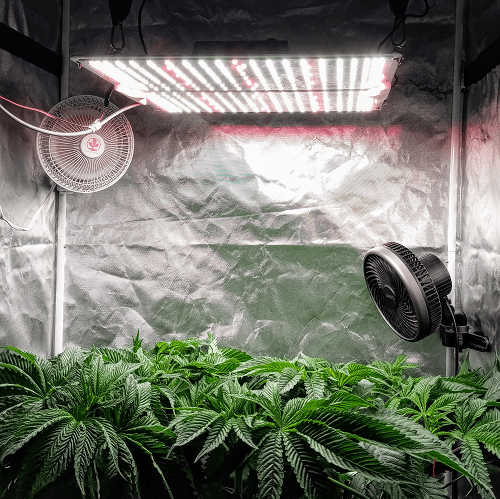
2000 watt (rated) Spider Farmer LED in tent B. Excellent coverage at 2 1/2 sq. foot. Greater density of LED diodes around the edge evenly distribute the light. 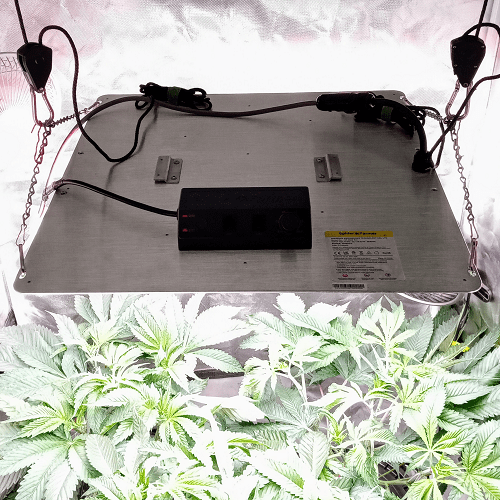
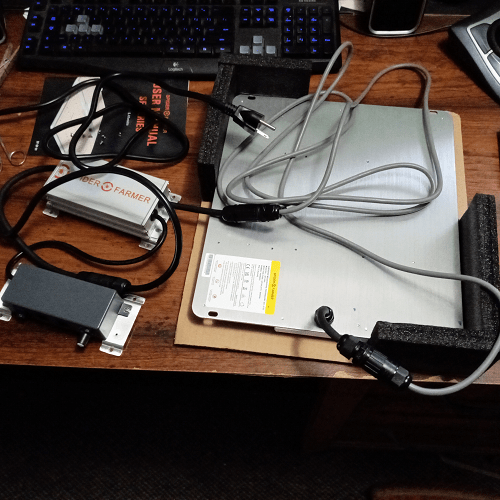
The control for the dimmer on these lights is on top and cannot be removed. I had to extend the cord to reach the regulator. 
Dimmer control for the 2000 watt light
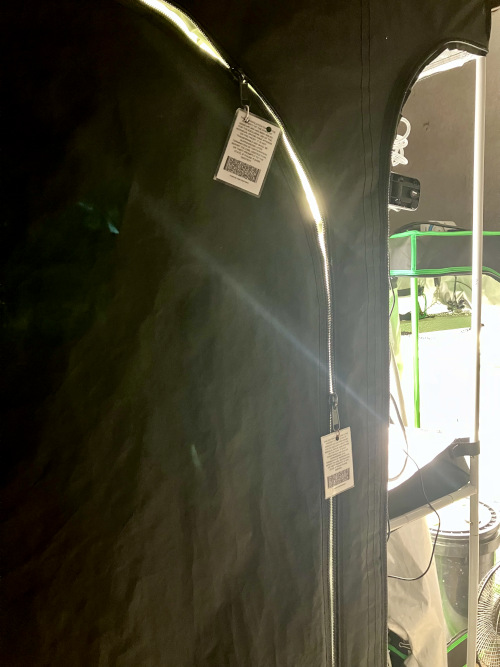
A major myth is that these tents need to have a completely light proof zipper so no outside light can interfere with the 12 flowering cycle these plants need. For one thing, these tents all have mesh vents that will let in some light anyway. I had several clones begin to flower because I forgot to reset the light timer I was using from 12 to 18 hours. Even though they were sitting next to a 1000 watt rated LED that was running at 18 hours per day.
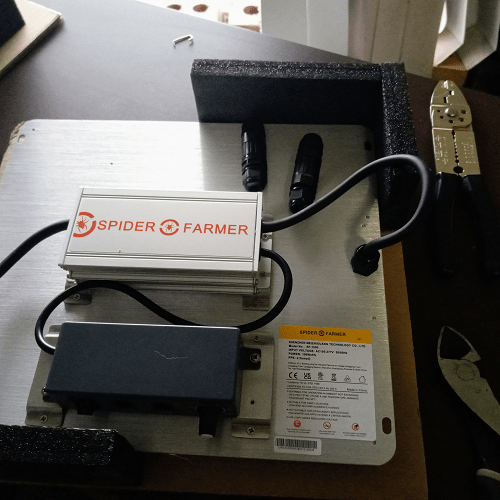
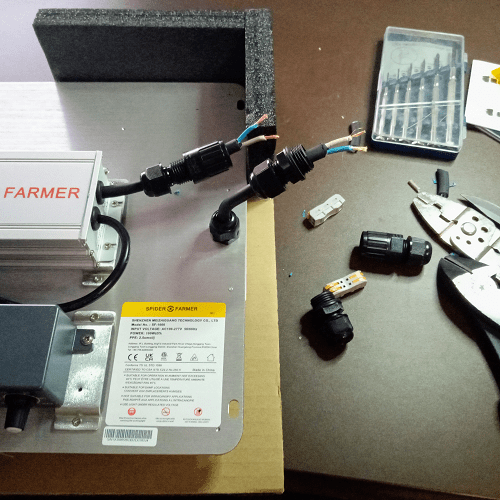
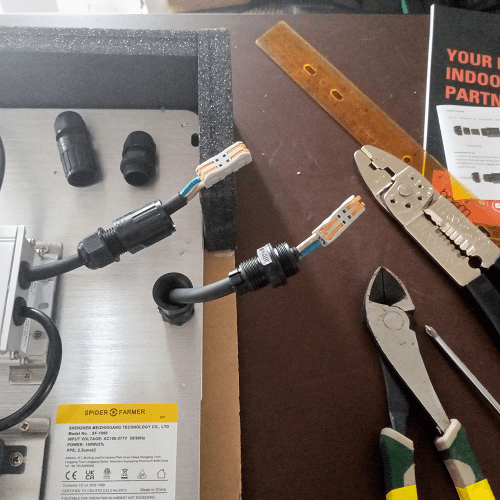
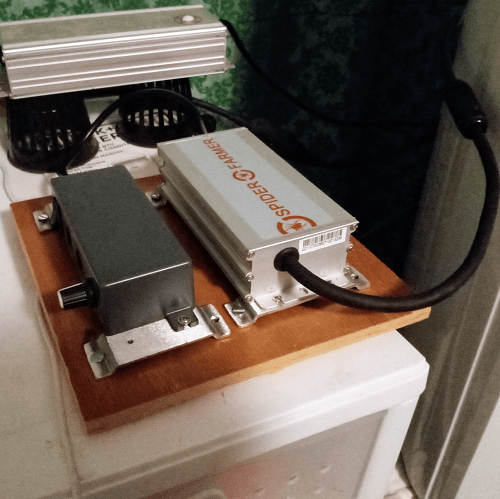
These lights have a regulator which puts out a lot of heat. I have purchased lights with detachable regulators that can be placed outside the tents. While they are “detachable” some come with very short cords and are never wired the same way. I like the Mars lights but they no longer have detachable regulators on the 1000 light.
The Mars 600w rated light over the clones also provides extra light for the plants during the vegetation stage.
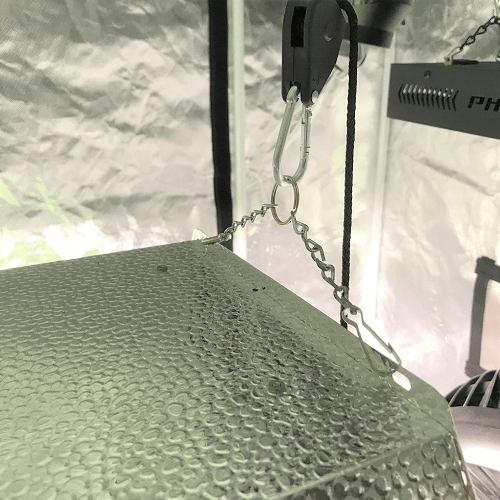
These lights come with adjustable pulleys so they can be moved as the plants grow. The wire hangers that come with the lights are too long given the limited vertical space in the tents. I made shorter ones out of chain links, metal hoops and metal clips.
Each light is plugged into a timer. During the vegetation stage the lights are on 18 hours a day. For the flowering stage the timer is set to 12 hours a day. This mimics the shorter day length of fall, triggering the plants to begin their flowering cycle.

 Growing medical cannabis